
Original source publication: Fernandes, I. C., F. de Sá-Soares, A. Tereso and P. Sousa (2023). Governance Models for Non-Profil Organizations: A Literature Review. Proceedings of the International Conference on ENTERprise Information Systems—CENTERIS 2023, Guimarães (Portugal).
The final publication is available here.
Governance Models for Non-Profit Organizations: A Literature Review
a Master in Information Systems, University of Minho, Guimarães, Portugal
b ALGORITMI Research Centre/LASI, University of Minho, Guimarães, Portugal
Abstract
Good corporate governance, which influences organizational performance, is the foundation of effective internal control. Adopting a governance paradigm, however, presents difficulties. By identifying and mapping processes and data, Enterprise Architecture (EA) may help with changes. Key Performance Indicators (KPI) provide important indicators for organizational activities. By employing a structured Balanced Scorecard (BSC), management may obtain a comprehensive overview of performance and make informed decisions to improve outcomes.
In this article, we will present relevant concepts related to Governance Models, obtained through a comprehensive literature review. The advantages of implementing a suitable governance model and the essential tools for its development are also discussed. We will close with a summary and open research questions.
Keywords: Balanced Scorecard (BSC); Enterprise Architecture (EA); Governance Model; Key Performance Indicators (KPI); Portuguese Project Management Observatory (PPMO)
1. Introduction
Good corporate governance should form the bedrock of effective internal control as it directly contributes to enhancing organizational performance once the organization’s established structures have been evaluated [Bîrcă 2018]. Corporate governance within a business can be beneficial in various areas, including accountability, economic and strategic efficiency, and stakeholder management [Broni and Velentzas 2012].
The implementation of a Governance Model (GM) poses certain difficulties because it is often applied in a highly organized company, requiring organizational adjustments [Chhotray and Stoker 2009]. However, when talking about NPOs, Kaplan [2001] notes that achieving alignment and focus tends to be difficult. Due to reasons such as lack of resources or over-simplification of the organization, several obstacles may arise when developing or implementing a GM in NPOs.
The literature review methodology was employed in this research to assess, examine, and comprehend the practices, resources, prerequisites, and challenges involved in developing GM for NPOs.
The article is structured as follows. The overall empirical research process is described by outlining the research setting and the methodology in section 2. Section 3 presents a literature review that focuses on concepts that might assist an NPO, such as the PPMO, to articulate its decision layers in a design that promotes the effective integration between its governance system and its management structure. In Section 4, the results are discussed. The last section draws conclusions from the findings and suggests avenues for future research.
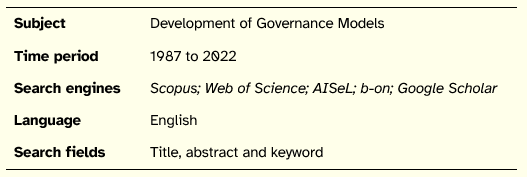
2. Research Methodology
Table 1
3. Literature Review
3.1 Governance and Governance Models
Authority, accountability, and responsibility are all balanced through governance, which regulates and directs an organization [McGrath and Whitty 2015]. To provide leadership and ensure accountability, effective governance requires openness, predictability, and involvement [Gill 2006].
Corporate Governance (CG) refers to the steering, oversight, and responsibility of a company [Kurniasanti and Musdholifah 2018]. It encompasses directing and controlling tasks to guarantee that investors realize their expected returns, the legitimate interests of stakeholders are considered, and ethical conduct and accountability are promoted [Adnan and Ahmed 2019; Dănescu et al. 2015; ISACA 2018].
Good governance fosters effective resource utilization and risk optimization, clarifies rights and responsibilities, ensures benefits assessment and realization, and establishes long-term strategic goals, all of which positively impact an organization’s performance [Bîrcă 2018; Broni and Velentzas 2012; ISACA 2018]. Also, effective governance gives management a framework for accountability that can enhance organizational action [Gill 2006].
3.2 Enterprise Architecture, Information Architecture and Process Architecture
The organization’s activities, structure, or procedures may change as a result of the implementation of a new GM [Chhotray and Stoker 2009]. Therefore, it is crucial to address the Enterprise Architecture (EA), which also strives to lead successful change, to facilitate the adoption of the GM in NPOs [The Open Group 2022]. EA is a representation that businesses may use to efficiently manage change and match their business goals with their business processes. EA allows managers to view the organization as a whole by gathering and storing related data in a single repository [Silva Rodrigues and Amaral 2010]. It directs the creation of an organization’s operational platform, which consists of the business procedures, people, equipment and Information Technology (IT) that support organizational functions [Correia Freitas Silva 2014].
Planning, designing, and managing business information is made easier by the Information Architecture (IA) representation for managers and business data administrators [Rood 1994]. IA, as defended by Jafari et al. [2009], can be created using either top-down or bottom-up approaches. Finally, when creating an IA, the perspectives of the owner, designer, and builder should be considered [Zachman 1987].
There are two ways to look at Process Architecture (PA): as a collection of processes or as a single process [Eppinger and Browning 2012; Koliadis et al. 2008]. Researchers use the terms Business Process Architecture or Enterprise Process Architecture to distinguish these two viewpoints [De Bruin and Roseman 2006; Koliadis et al. 2008].
3.3 Balanced Scorecard and Key Performance Indicators
The Balanced Scorecard (BSC), as pointed out by Kaplan and Norton [1992], is a tool used to assess and enhance the performance of businesses. Four perspectives make up the BSC: i) Financial - relates to economic performance and viability; ii) Costumer perspective - helps to identify the current and future market segments and customers and to assess the performance regarding aspects as time, quality, service, and cost of offerings; iii) Internal business process perspective - refers to the efficiency and quality in the processes; and, iv) Innovation and learning perspective - concerns innovation and improvement possibilities regarding infrastructure, technology, culture, and human capital training [Kaplan 2001]. The BSC, as defended by Kaplan and Norton [1992], eliminates information overload and concentrates executives on a small number of crucial metrics, by reducing the number of measures employed. The necessity to establish a BSC in NPOs stems from the goal of balancing the organization’s assessments beyond financial success [Zimmerman 2004]. Some years later, Figge et al. [2002] introduced another perspective to be employed in NPOs, the non-market perspective. The authors also recommend the identification of sustainable hotspots within the business model through the utilization of a materiality matrix. This tool helps to prioritize the relevant aspects that are important for both the organization and its stakeholders.

Figure 1: Sustainability Business Model Framework
Adapted from Lüdeke-Freund et al. [2017]
The Business Model (BM) represents the way an organization creates value through activities and resources (the HOW). On the other hand, the Sustainability BSC synthesizes the organization’s goals and assesses their achievement (the WHAT). At the junction, one question comes up: are the performed activities of the BM in line with the organization’s strategic goals?
KPIs are crucial measurements for determining how successfully a business achieves its strategic goals [Warren 2011]. KPIs must be simple to comprehend, align with the goals of all stakeholders, and come from inside the business to be effective [Warren 2011]. Effective KPIs have seven qualities, according to Janickova and Zizlavsky [2019], they are non-financial and performance-related, continually monitored, easy to grasp, team-based, have a major influence on the company, and promote the right actions.
4. Results and Discussion
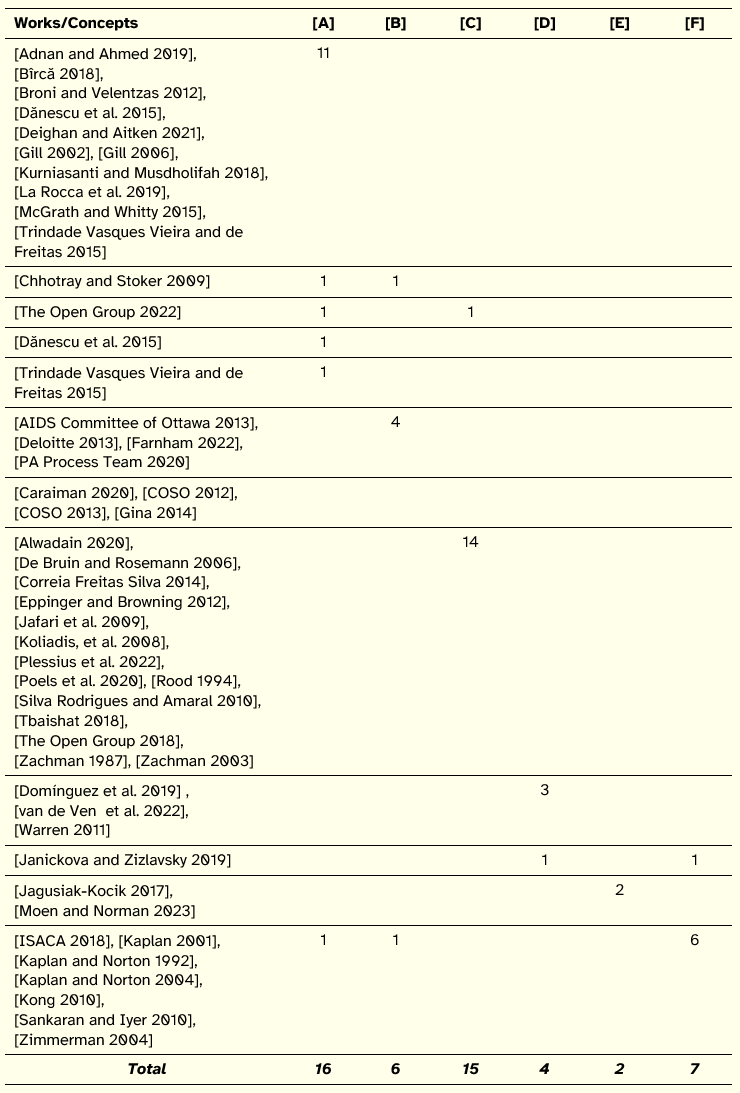
The literature review culminates in the presentation of a work/concept matrix, presented in Table 2. This matrix serves to map the key concepts identified in the literature, which are crucial to be incorporated during the design of the PPMO governance model.
On the other hand, setbacks may arise due to challenges, such as conflicts of interest and lack of trust. As highlighted by Chhotray and Stoker [Chhotray and Stoker 2009], this is precisely why organizations require a hierarchy. It serves the purpose of establishing and maintaining rules, while simultaneously promoting individuality and collaboration [Chhotray and Stoker 2009]. In addition to this, governance strategies should foster cooperation among decision-makers and facilitate effective decision-making processes grounded in moral principles and real-time information [Deighan and Aitken 2021]. Given the complexity involved, effective governance requires a specific array of tools [Chhotray and Stoker 2009].
Table 2: Works and Concepts
Legend: [A] Governance; [B] GM; [C] Architectures (EA, IA, PA); [D] KPI; [E] PDCA; [F] BSC
In GM, power dynamics, decision-making processes, and norms inside an organization must all be outlined. A good GM makes management and responsibilities transparent and clear, enhances process coordination, and boosts governance effectiveness [Chhotray and Stoker 2009; Deloitte 2013].
Gill [2006] proposes several concepts and methods for establishing a successful GM. These include elements, such as strong leadership, transparent delineation of roles and relationships, consideration of stakeholder expectations, fostering teamwork, conducting regular reviews, and cultivating a high level of trust and consensus-building. The GM should encompass the structure and functions of the board, a code of conduct, managerial positions, and long-term goals, all of which should be specified and articulated.
The benefits of EA in effectively managing complex business and technological environments are evident. EA excels in handling intricate systems by breaking them down into their constituent parts and connections, enabling future design modifications [Zachman 2003]. As a fundamental tool for communication and decision-making, EA offers a clear and thorough understanding of an organization’s structure and interrelationships [Plessius et al. 2014; The Open Group 2022].
The Open Group [2018] presents the Architecture Development Method (ADM) as a comprehensive approach. The ADM comprises several key components, including the Architecture Vision, Business Architecture, Information Systems Architecture, Technology Architecture, Opportunities and Solutions, Migration Planning, Governance Implementation, and Change Management Architecture. Alternatively, Zachman [2003] and Jafari et al. [2009] offer a framework for EA development that includes views, abstractions, and guidelines [Jafari et al. 2009; Zachman 2003].
The utilization of PA is essential for both EA and the management of numerous processes [Poels et al. 2020]. PA serves the purpose of effectively managing processes as strategic assets for operational success and efficiency within businesses, particularly when integrated as part of EA [Poels et al. 2020].
The importance of KPIs in corporate performance can be summarized by their focus on critical performance attributes and their ability to help organizations establish measurable objectives and evaluate their achievement [van de Ven et al. 2022]. KPIs are crucial for assessing how the extent to which a company is effectively progressing towards its strategic goals [Domínguez et al. 2019; Janickova and Zizlavsky 2019; Warren 2011].
Once established, a GM should be monitored and reviewed. The PDCA (Plan-Do-Check-Act) cycle might prove useful to ensure continuous improvement of governance systems.
The BSC provides a full picture of how the business aligns with the strategy. It establishes connections between the goals of the four perspectives, whereby improvements in process performance result in successful outcomes for customers and shareholders [Kaplan and Norton 2004].
Within NPOs, training programs play a crucial role in enhancing the skills of employees and volunteers, ultimately leading to improved service delivery and increased satisfaction among stakeholders [Kong 2010].
Figure 2 provides an overview of the proposed design for the PPMO Governance Model in conjunction with the PPMO Management Structure, which consists of two levels: the governance level and the management level,encompassing four layers. These layers are as follows: i) Layer 1—Governance System; ii) Layer 2—Management System; iii) Layer 3—Portfolio System and Programme System; iv) Layer 4—Project Management System. Each layer depicts the roles or functions responsible for operating the corresponding system.
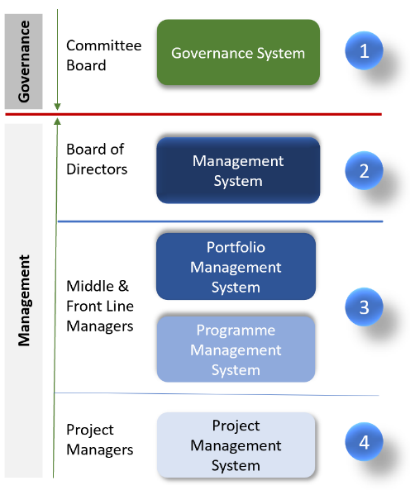
Figure 2: Overview of the PPMO Governance Model and Management Structure
5. Conclusions
Ultimately, the design and implementation of an effective governance model, such as the one proposed for the PPMO, can yield significant benefits for organizations, including enhanced decision-making processes, transparency and accountability, and collaboration and mutual understanding between stakeholders.
It is important to acknowledge the limitations of the current study. Firstly, the observation of the concept matrix highlighted a lack of research on the principles and procedures for creating a governance model, indicating the need for further study in this area. Although a variety of relevant tools have been identified to that end, we need to grasp an efficient way to combine them, make a trial version, implement de trial version on the PPMO, make the necessary adaptations, and collect the lessons learned in order to form a basis for the development of governance systems in NPOs.
Future work will focus on: i) designing the GM; ii) implementing the GM; iii) piloting the governance system; and iv) improving the governance system and model.
Acknowledgements
This work has been supported by FCT—Fundação para a Ciência e Tecnologia within the R&D Units Project Scope: UIDB/00319/2020.
References
AIDS Committee of Ottawa (2013). Different Types of Governance Models. [Online]. Available: http://aco-cso.ca/wp-content/uploads/2013/05/BOD_TypesOfGovernanceModels.pdf
Adnan, A. and N. Ahmed (2019).The Transformation of the Corporate Governance Model: A Literature Review. Copernican Journal of Finance & Accounting 8(3), 7–47. DOI: 10.12775/CJFA.2019.011.
Alwadain, A. (2020). Enterprise Architecture: A Business Value Realization Model. Sustainability. DOI: 10.3390/su12208485.
Broni, G. and J. Velentzas (2012). Corporate Governance, Control and Individualism as a Definition of Business Success. The Idea of a Procedia Economics and Finance 1, 61–70. DOI: 10.1016/s2212-5671(12)00009-3.‘ Bîrcă, A. (2018). Studiu Empiric Asupra Relațiilor Dintre Guvernanța Corporativă Și Controlul Intern. Akademos 3, 61–66.
De Bruin, T. and M. Rosemann (2006). Towards Understanding Strategic Alignment of Business Process Management. 17th Australasian Conference on Information Systems. [Online]. Available: http://aisel.aisnet.org/acis2006
Caraiman, A.-C. (2020). Responsibility for Internal Control in Corporate Governance. Ovidius University Annals, Economic Sciences XX(2), 612–619. [Online]. Available: https://stec.univ-ovidius.ro/html/anale/RO/wp-content/uploads/2021/03/Section 4/6.pdf
Chhotray, V. and G. Stoker (2009). Governance: From Theory to Practice. In Governance Theory and Practice. London: Palgrave Macmillan, 214–247. DOI: 10.1057/9780230583344_10.
Correia Freitas Silva, J. D. (2014). Instrumento para a Avaliação de Arquiteturas Empresariais baseadas em TOGAF 9.1. Universidade do Minho.
COSO (2012), Framework and Appendices. COSO Internal Control-Integrated Framework. [Online]. Available: www.ic.coso.org
COSO (2013). Executive summary. New York, 1–20. Accessed: Nov. 13, 2022. [Online]. Available: http://www.coso.org/documents/990025P_Executive_Summary_final_may20_e.pdf
Dănescu,T., M. Prozan, and R. D. Prozan (2015). Perspectives Regarding Accounting—Corporate Governance—Internal Control. Procedia Economics and Finance 32, 588–594. DOI: 10.1016/S2212-5671(15)01436-7.
Deighan, M. and F. Aitken (2021). Plurality of governance—the transparency of definitions. Journal of the Royal College of Physicians of Edinburgh 51(20), 123–124. DOI: 10.4997/JRCPE.2021.204.
Deloitte (2013). Developing an effective governance operating model: A guide for financial services boards and management teams. Deloitte Development LLC, 16. [Online]. Available: http://www.deloitte.com
Domínguez, E., B. Pérez, Á. L. Rubio and M. A. Zapata (2019). A taxonomy for key performance indicators management. Computer Standards & Interfaces 64, 24–40. DOI: 10.1016/J.CSI.2018.12.001.
Engert, S., R. Rauter, and R. J. Baumgartner (2016). Exploring the integration of corporate sustainability into strategic management: A literature review. Journal of Cleaner Production 112, 2833–2850. DOI: 10.1016/j.jclepro.2015.08.031.
Eppinger, S. D. and T. R. Browning (2012). Process Architecture DSM Models. In Design Structure Matrix Methods and Applications, 129–152. DOI: 10.7551/mitpress/8896.003.0008.
Farnham, K. (2022). No TiBoard Governance Models: 5 Examples of the Most Prominent Frameworkstle. https://www.diligent.com/insights/board-governance/examples-board-governance-models/
Figge, F., T. Hahn, S. Schaltegger and M. Wagner (2002). The sustainability balanced scorecard—linking sustainability management to business strategy. Busisness Strategy Environment 11(5), 269–284.
Gill, M. D. (2002). Building Effective Approaches to Governance. Nonprofit Quarterly. [Online]. Available: https://nonprofitquarterly.org/building-effective-approaches-to-governance-models
Gill, M. D. (2006). Governing for results: a director’s guide to good governance. Victoria, B.C.: Trafford. [Online]. Available: https://archive.org/details/governingforresu00meld/page/n3/mode/2up
Gina, O., R. Adeghe and O.-E. Osaretin Kingsley (2014). Internal Control As A Potential Instrument For Corporate Governance. IOSR Journal of Economics and Finance 2(6), 66–70. DOI: 10.9790/5933-0266670.
ISACA (2018). COBIT 2019 Framework: Introduction and Methodology. ISACA.
Jafari, M., P. Akhavan, and E. Nouranipour (2009). Developing an architecture model for enterprise knowledge: An empirical study based on the Zachman framework in Iran. Management Decision 47(5), 730–759. DOI: 10.1108/00251740910960097.
Jagusiak-Kocik, M. (2017). PDCA cycle as a part of continuous improvement in the production company - A case study. Production Engineering Archives 14(14), 19–22. DOI: 10.30657/pea.2017.14.05.
Janickova, N. and O. Zizlavsky (2019). Key Performance Indicators and the Balanced Scorecard Approach in Small and Medium-Sized Enterprises: A Literature Review. In Perspectives of Business and Entrepreneurship Development in Digital Transformation of Corporate Business, Brno, 55–64.
Kaplan, R. S. (2001). Strategic Performance Measurement and Management in Nonprofit Organizations. Nonprofit Management Leadership 11(3), 353–370. [Online]. Available: http://onlinelibrary.wiley.com/doi/10.1002/nml.11308/abstract
Kaplan, R. S. and D. P. Norton (1992). The Balanced Scorecard-Measures That Drive Performance. Harvard Business Review, 71–79.
Kaplan, R. S. and D. P. Norton (2004). Strategy Maps: Converting Intangible Assets into Tangible Outcomes. Boston: Harvard Business School Press.
Koliadis, G., A. K. Ghose and S. Padmanabhuni (2008). Towards an enterprise business process architecture standard. Proceedings - 2008 IEEE Congress on Services, SERVICES 2008, 239–246. DOI: 10.1109/SERVICES-1.2008.60.
Kong, E. (2010). Analyzing BSC and IC’s usefulness in nonprofit organizations. Journal of Intellectual Capital 11(3), 284–304. DOI: 10.1108/14691931011064554.
Kurniasanti, A. and M. Musdholifah (2018). Corporate Governance. Oxford Encyclopedia of Business and Management, 84–97.
La Rocca, M., F. Fasano and G. M. Napoli (2019). Alitalia airline: A business case of bad corporate governance. Corporate Ownership and Control 17(10), 264–277. DOI: 10.22495/cocv17i1siart9.
Lüdeke-Freund, F. and K. Dembek (2017). Sustainable business model research and practice: Emerging field or passing fancy?. Journal of Cleaner Production 168, 1668–1678.
McGrath, S. K. and S. J. Whitty (2015). Redefining governance: from confusion to certainty and clarity. International Journal of Managing Projects in Business 8(4), 755–787. DOI: 10.1108/IJMPB-10-2014-0071.
Moen, R. and C. Norman (2023). Evolution of the PDCA Cycle. Accessed: Apr. 30, 2023. [Online]. Available: https://www.anforq.org/activities/congresses/index.html
PA Process Team (2020). The Four Models of Governance. https://processpa.com/ExecutiveMatters/the-four-models-of-governance
Plessius, H., vav M. Steenbergen and S. Raymond. Slot (2014). Perceived Benefits from Enterprise Architecture. MCIS 2014 Proceedings. Accessed: Dec. 12, 2022. [Online]. Available: http://aisel.aisnet.org/mcis2014/23
Poels, G., F. García, F. Ruiz and M. Piattini (2020). Architecting business process maps. Computer Science and Information Systems 17(1), 117–139. DOI: 10.2298/CSIS181118018P.
Rood, M. A. (1994). Enterprise architecture: definition, content, and utility. 3rd IEEE Workshop on Enabling Technologies: Infrastructure for Collaborative Enterprises, 106–111. DOI: 10.1109/ENABL.1994.330494.
Sankaran, K. and S. Iyer (2010). Governance tools for board members. Adapting strategy maps and balanced scorecards for directorial action. Verslo ir teisės aktualijos 6(1), 141–158. DOI: 10.5200/1822-9530.2011.08.
Silva Rodrigues, L. and L. Amaral (2010). Multidimensional value of Enterprise Architectures. IADIS International Conference Information Systems 2010, 409–413.
Tbaishat, D. (2018). Process architecture development using Riva and ARIS: comparative study. Business Process Management Journal 24(3), 837–858. DOI: 10.1108/BPMJ-04-2016-0086.
The Open Group (2018). The TOGAF® Standard Version 9.2. https://pubs.opengroup.org/architecture/togaf9-doc/arch/
The Open Group (2022). A Practitioners’ Approach to Developing Enterprise Architecture Following the TOGAF ® ADM. In TOGAF®Series Guide. [Online]. Available: www.opengroup.org/legal/licensing.
Trindade Vasques Vieira, E. and J. C. de Freitas (2015). Consequences of Internal Control and COSO for Auditing and Corporate Governance—An Exploratory Research. Revista Cinetífica Hermes 14, 156–175.
van de Ven,R. M., P. Lara Machado, A. Athanasopoulou, B. Aysolmaz and O. Turetken (2022). Key Performance Indicators for Business Models: A Review of Literature. ECIS 2022 Research Papers. [Online]. Available: https://aisel.aisnet.org/ecis2022_rp/126
Warren, J. (2011). Key Performance Indicators (KPI) - Definition and Action.
Zachman, J. A. (1987). Framework for information systems architecture. IBM Systems Journal 28(3), 454–470. DOI: 10.1147/sj.382.0454.
Zachman, J. A. (2003). The Zachman Framework for Enterprise Architecture: Primer for Enterprise Engineering and Manufacturing. Zachman International. [Online]. Available: http://www.zachmaninternational.com
Zimmerman, J. (2004). Using a Balanced Scorecard in a Nonprofit Organization. Nonprofit World 27(3), 1–4. [Online]. Available: www.snpo.org/mcmbcrs.